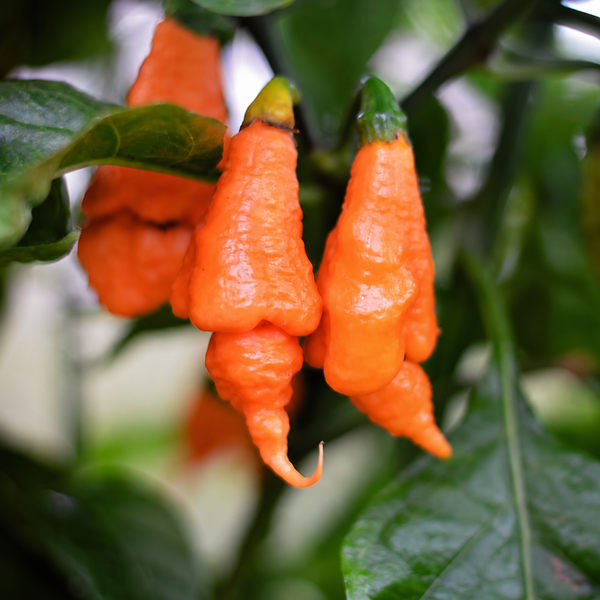
Collector Pepper

Purple Massacre is listed in our superhot collection for cooks who want to experiment with very small amounts of pepper in cooked sauces, pastes and dried seasoning. Add it gradually so the pepper complements the rest of the dish.
CASA VERDE · HEAT PROFILE
Super hot
- Sweet
- Mild
- Medium
- Hot
- Super hot — this variety
The arrow marks the listed lower bound; heat can be higher.
Understanding the heat
A diamond marks the midpoint of a listed range, or the listed value when only one number is given. An arrow marks a stated limit. These are variety guides, not measurements of our seed lot. This guide uses unequal numerical bands: sweet 0; mild up to 10,000; medium 10,000–50,000; hot 50,000–800,000; super hot from 800,000 SHU (display capped at 3 million). Heat varies between fruits and with growing conditions.
Shop all pepper seeds in Canada
- Packet
- 10+ seeds per packet
- Maturity
- Harvest timing varies; seed-lot maturity unconfirmed.
CASA VERDE · GROWER’S NOTES
Get to know your pepper.
10+ seeds per packet
Purple Massacre pepper seeds
Purple Massacre is listed in our superhot collection for cooks who want to experiment with very small amounts of pepper in cooked sauces, pastes and dried seasoning. Add it gradually so the pepper complements the rest of the dish.
At a glance
Heat category
Superhot · catalogue classification
Purpose
Collector pepper
Kitchen ideas
Cooked sauces, pastes and dried seasoning
Packet
10+ seeds
Why grow it?
Choose it as a collector pepper for kitchen experiments with heat. The name appears on differing pepper lines in published catalogues, so we are not assigning a botanical species or promising a particular flavour profile without confirming the seed source.
In the kitchen
- Cooked sauce: Add a very small amount to a tomato or fruit-based sauce, then adjust gradually.
- Pepper paste: Blend a little into a cooked vegetable paste to spread the heat through the dish.
- Dried seasoning: Use sparingly in a seasoning blend. Avoid breathing pepper dust when grinding.
Growing and harvesting
- Start indoors: Give seedlings warmth and bright light.
- Transplant: Harden plants off gradually; wait until frost risk has passed and nights are warm.
- Care: Keep moisture steady in well-drained soil.
- Maturity: Harvest timing for this seed lot is unconfirmed. Allow a margin before autumn frost.
Explore by culinary use
Pepper seeds CanadaHot sauce pepper seedsChoosing peppers for Canadian gardensCommon questions
Is the heat level laboratory tested?
The Superhot label and displayed Scoville figure are catalogue references, not a laboratory measurement of this seed lot.
Is it guaranteed to ripen in a short season?
No. We do not have verified local trial records or a maturity-day figure for this lot.
Which species is Purple Massacre?
Published listings conflict. We will leave the species unassigned until the identity of our seed line is confirmed.
How should I use the harvest?
Begin with very small amounts in cooked sauces or pastes. Wear gloves when cutting hot peppers and keep your hands away from your eyes.
Seed note: plant appearance, flavour, heat and ripening can vary. This listing does not establish a fixed generation or a stabilized seed line.
Cook your harvest
Use your harvest in these recipes. Check the variety notes and substitutions in each recipe.
Start indoors 8–10 weeks before last frost. Germinate at 26–30 °C on a heat mat; peppers stall below 22 °C. Pot up to 10–15 cm before hardening off outside after nights stay above 12 °C.
Feed balanced through bloom, then bump potassium for fruiting. Stake taller varieties. More detail in our full Canadian growing guide.
Match the pepper to the technique: thin-walled varieties blister fast in a hot pan; thick-walled ones roast or stuff beautifully; fruit-forward ones make balanced sauces and pickles. The variety's flavour profile is your shortcut — see Choosing the right pepper for a use-case guide.