Collector Pepper

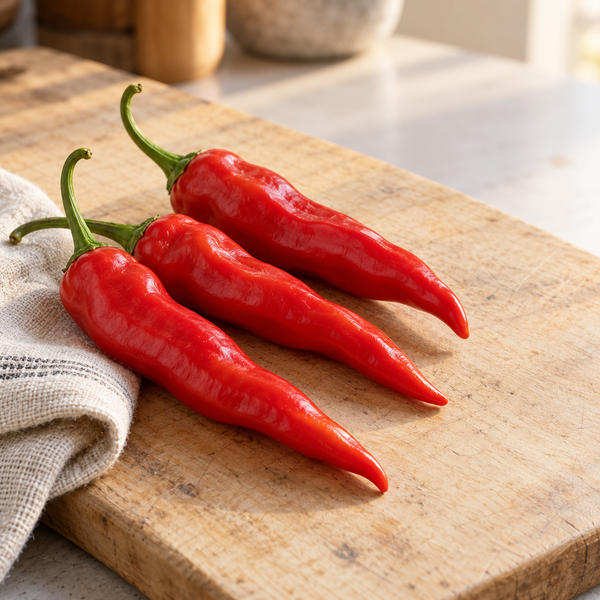
Vezenka’s red fruit develops a striking network of tan corking, often described as embroidered skin. Put it to work in roasted pepper sauces, slow-cooked beans or dried pepper seasoning.
CASA VERDE · HEAT PROFILE
Mild
- Sweet
- Mild — this variety
- Medium
- Hot
- Super hot
Understanding the heat
A diamond marks the midpoint of a listed range, or the listed value when only one number is given. An arrow marks a stated limit. These are variety guides, not measurements of our seed lot. This guide uses unequal numerical bands: sweet 0; mild up to 10,000; medium 10,000–50,000; hot 50,000–800,000; super hot from 800,000 SHU (display capped at 3 million). Heat varies between fruits and with growing conditions.
Shop all pepper seeds in Canada
- Heat
- 1200–5000 SHU
- Origin
- Eastern Europe
FROM GARDEN TO KITCHEN
Vezenka, from seed to supper.
Explore roasting, slow cooking and drying with this distinctive cork-skinned pepper.

01 / ROAST FOR SAUCE
Roasted pepper meets ripe tomato.
Roast ripe Vezenka until tender, then blend with cooked tomato and garlic. Strain if you prefer a smoother sauce; the corked skins can be firm. Add pepper gradually to adjust the heat.

02 / SIMMER WITH BEANS
A warming bowl for cooler days.
Add short strips of roasted Vezenka to white beans, onion and tomato broth. Simmer until the pepper is tender and serve with bread; use less pepper for a gentler bowl.

03 / DRY FOR THE PANTRY
Flakes or powder, by the pinch.
Dry ripe peppers thoroughly, then crush into flakes or grind into powder. Add a small pinch to soups, beans or roasted vegetables. Let any dust settle before opening a grinder.
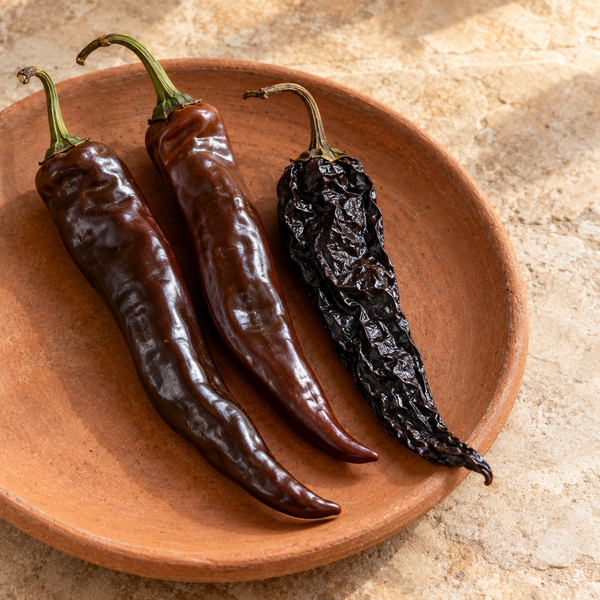
AI-generated culinary illustrations. Serving inspiration, not photographs of our harvest. Select a photo to enlarge.
CASA VERDE · GROWER’S NOTES
Get to know your pepper.
Embroidered pepper for the pantry
Vezenka pepper seeds
Vezenka’s red fruit develops a striking network of tan corking, often described as embroidered skin. Put it to work in roasted pepper sauces, slow-cooked beans or dried pepper seasoning.
At a glance
Crop
Capsicum annuum
Heat guide
Mild; commonly listed at 1,200–5,000 SHU
Skin
Prominent tan corking
Kitchen role
Roasting, cooking and drying
Why grow it?
This Macedonian pepper type offers both visual character and useful pantry flavour. Its textured skin can be leathery when raw, making cooked and dried preparations a better starting point.
In the kitchen
- Roast for sauce: Roast until tender, then blend the flesh into a tomato or vegetable sauce.
- Cook with beans: Chop a little pepper into a bean stew and let the flavours develop during cooking.
- Dry for seasoning: Dry ripe fruit thoroughly and grind or crush it for seasoning. Drying alone does not make a pepper smoked; use a suitable smoking process if that is the flavour you want.
Growing and harvesting
- Start indoors: Provide warm seed-starting conditions and bright light after emergence.
- Transplant: Harden plants off and wait until frost risk has passed and the soil and nights are warm.
- Site: Choose full sun, well-drained soil and steady moisture.
- Harvest: Allow fruit to turn red for drying. Start indoors, transplant after frost and provide a sunny, warm position. Corking and yield vary; the textured skin does not make the plant frost-hardy.
Explore the catalogue
Pepper seeds CanadaPepper germination guideCommon questions
Is the corking normal?
The tan, stitched-looking surface is characteristic of this pepper type. It is different from soft, wet or decaying damage, which should not be used.
Is it naturally smoky?
Do not expect the flavour of smoked paprika from an untreated fresh pepper. Roasting, drying and smoking are different preparations, with different results.
Is the heat range guaranteed?
No. Published ranges describe varieties or grower selections. They do not measure this seed lot, and individual harvests can vary.
Kitchen note: begin with a small amount and adjust the seasoning after it is mixed through the dish.
Cook your harvest
Use your harvest in these recipes. Check the variety notes and substitutions in each recipe.
Start indoors 8–10 weeks before last frost. Germinate at 26–30 °C on a heat mat; peppers stall below 22 °C. Pot up to 10–15 cm before hardening off outside after nights stay above 12 °C.
Feed balanced through bloom, then bump potassium for fruiting. Stake taller varieties. More detail in our full Canadian growing guide.
Match the pepper to the technique: thin-walled varieties blister fast in a hot pan; thick-walled ones roast or stuff beautifully; fruit-forward ones make balanced sauces and pickles. The variety's flavour profile is your shortcut — see Choosing the right pepper for a use-case guide.