In the kitchen
- Sauce: Blend a small amount into a cooked tomato or fruit-based sauce.
- Seasoning: Dry thoroughly for flakes or powder; handle the powder carefully.
- Cooking: Add small portions to a pot of stew or curry and adjust gradually.
 Collector Pepper

Yellow Tiger is a collector pepper listed for very hot sauces and dried seasonings. Use small portions in a sauce with tomato, citrus or fruit, then adjust to taste. Its exact Scoville range and the pedigree of this seed lot...
CASA VERDE · HEAT PROFILE
Super hot
Scoville range awaiting confirmation.
A diamond marks the midpoint of a listed range, or the listed value when only one number is given. An arrow marks a stated limit. These are variety guides, not measurements of our seed lot. This guide uses unequal numerical bands: sweet 0; mild up to 10,000; medium 10,000–50,000; hot 50,000–800,000; super hot from 800,000 SHU (display capped at 3 million). Heat varies between fruits and with growing conditions.
No numeric marker is shown without a sufficiently clear range. For bundles, the highlighted categories refer to the different varieties.
A Scoville range has not been listed for this variety.
Shop all pepper seeds in Canada
CASA VERDE · GROWER’S NOTES
Yellow Tiger is a collector pepper listed for very hot sauces and dried seasonings. Use small portions in a sauce with tomato, citrus or fruit, then adjust to taste. Its exact Scoville range and the pedigree of this seed lot have not been verified.
Choose Yellow Tiger when you want to explore a collector selection in small batches of sauce or seasoning. Treat the catalogue heat category as a broad guide and assess each harvest before deciding how much to add.
We do not have reliable evidence for a precise range for this selection. The existing Superhot category is retained as catalogue guidance; no numeric marker is shown on the scale.
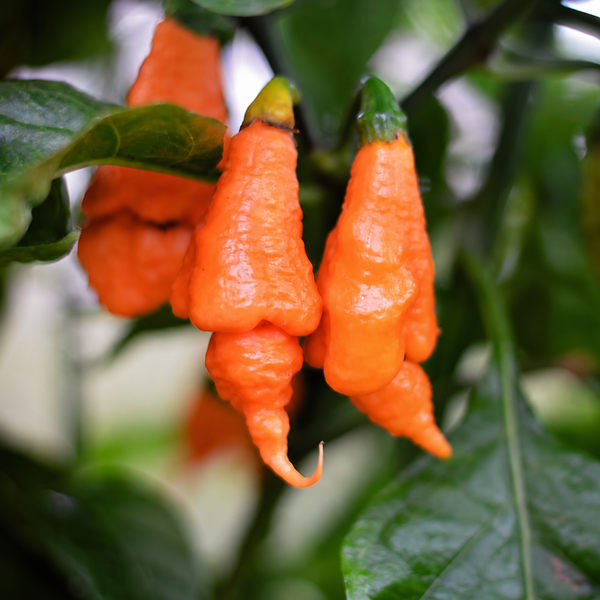
No precise colour sequence or stripe pattern is guaranteed. The catalogue photographs show yellow fruit with purple blush; appearance may vary.
There is no verified maturity estimate for this seed lot. Start indoors and provide sustained warmth. Protected growing can help extend the season, but it does not guarantee a ripe outdoor harvest.
The seed lot’s pedigree, generation and exact heat remain unconfirmed. Wear gloves when handling hot peppers; avoid your eyes and take care with chilli powder.
Use your harvest in these recipes. Check the variety notes and substitutions in each recipe.
Start indoors 8–10 weeks before last frost. Germinate at 26–30 °C on a heat mat; peppers stall below 22 °C. Pot up to 10–15 cm before hardening off outside after nights stay above 12 °C.
Feed balanced through bloom, then bump potassium for fruiting. Stake taller varieties. More detail in our full Canadian growing guide.
Match the pepper to the technique: thin-walled varieties blister fast in a hot pan; thick-walled ones roast or stuff beautifully; fruit-forward ones make balanced sauces and pickles. The variety's flavour profile is your shortcut — see Choosing the right pepper for a use-case guide.