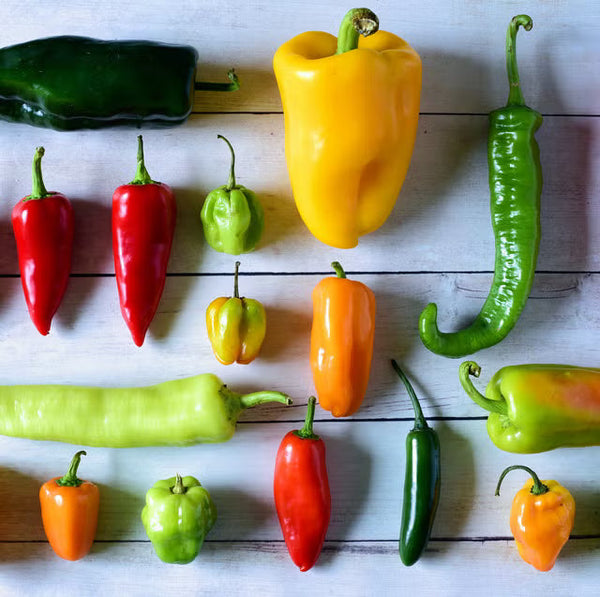
Choose pepper seeds by the meal you want to cook, then compare heat, fruit shape and harvest stage. A thin-walled frying pepper, a broad stuffing pepper and a tiny pickling pepper do different jobs—even when all three are mild.
Here are six varieties from our pepper seed collection in Canada, compared by kitchen use. The heat labels below follow our catalogue; heat can vary between plants and growing conditions.
Six peppers, six kitchen roles
Shishito
Usually mild; occasional hot pods
Thin-walled peppers, usually cooked green. Choose them for a quick blistered whole-pepper side.
Keep in mind: Small pods are better for frying than holding a substantial filling.
Jimmy Nardello
Sweet / heatless
Long, thin-walled peppers that ripen red. Choose them for sweet skillet peppers, sandwiches and roasted sides.
Keep in mind: A frying pepper rather than a broad, thick-walled bell pepper.
Poblano
Mild; heat can vary
Broad pods for roasting, peeling and stuffing. Green pods suit chile rellenos; ripe, dried pods are known as ancho.
Keep in mind: Choose it for a filled pepper or roasted strips, rather than a tiny whole-pepper garnish.
Sweet Drop Biquinho
Mild; not guaranteed heatless
Small, pointed pods with fruity flavour. Choose them for whole-pepper pickles, salads and a finishing garnish.
Keep in mind: If avoiding heat is essential, compare a heatless variety such as Habanada instead.
Sugar Rush Stripey
Hot in our catalogue
Fruity, striped peppers for fresh slices, sauce and seasoning. Choose them when you want flavour with noticeable heat.
Keep in mind: Fruity and sweet-tasting does not mean heatless. Taste the harvest before deciding how much to use.
Wildcat F1
Mild
Large cayenne-shaped peppers with fleshy walls. Choose them for roasting, sliced peppers and sauce with gentle warmth.
Keep in mind: Its long cayenne shape does not imply the heat of a typical hot cayenne.
Shishito or Jimmy Nardello for frying?
Choose Shishito for small green peppers served whole after a quick blistering. Choose Jimmy Nardello for sweet red peppers to soften in the pan and tuck into sandwiches or serve alongside a meal. Both have thin walls; neither needs to be treated like a large stuffing pepper.
Poblano or Wildcat for roasting?
Choose Poblano when the pepper needs room for a filling. Choose Wildcat when you want long, fleshy peppers to roast, slice or blend into sauce. Wildcat’s thick walls and mild heat are also described in its All-America Selections variety record.
Biquinho or Sugar Rush Stripey for fruity flavour?
Choose Biquinho for small whole pods in pickles and garnishes, with mild warmth. Choose Sugar Rush Stripey for a noticeably hotter fruit-forward sauce or sliced condiment. Sweetness describes flavour; it does not promise an absence of heat.
Before you choose for a Canadian garden
- Decide how you will harvest. Shishito and Poblano have useful green-harvest roles. Allow additional ripening time when you want fully coloured fruit.
- Check what “days to maturity” means. A figure measured from transplant is different from one measured from sowing. Green and ripe harvest dates are also different.
- Match the plant to your space. Check the variety’s habit, support needs and growing notes before choosing a container or bed.
- Plan around your own season. Use local frost dates, warmth and your growing setup—not one calendar date for all of Canada.
Continue with when to start pepper seeds in Canada and our pepper germination checklist.
What if I want pepper aroma without heat?
Compare Habanada with sweet frying peppers such as Jimmy Nardello. Habanada offers a different aromatic profile. Biquinho and Shishito are mild choices, but should not be treated as guaranteed heatless substitutes.
Build your shortlist around one frying pepper, one roasting or stuffing pepper, and one condiment pepper. Then check the individual product pages for packet details and growing information. These are variety comparisons, not promises of yield or harvest dates in every garden.