Kitchen Pepper

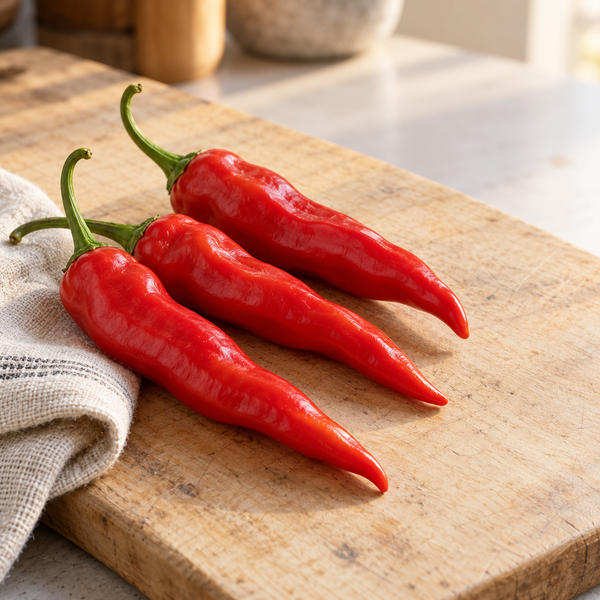
Biquinho peppers have a distinctive pointed, teardrop shape and a fruity flavour. Use the small pods in pickles, salads or as a finishing garnish when you want a pepper you can serve whole.
CASA VERDE · HEAT PROFILE
Mild
- Sweet
- Mild — this variety
- Medium
- Hot
- Super hot
Understanding the heat
A diamond marks the midpoint of a listed range, or the listed value when only one number is given. An arrow marks a stated limit. These are variety guides, not measurements of our seed lot. This guide uses unequal numerical bands: sweet 0; mild up to 10,000; medium 10,000–50,000; hot 50,000–800,000; super hot from 800,000 SHU (display capped at 3 million). Heat varies between fruits and with growing conditions.
Shop all pepper seeds in Canada
- Packet
- 10+ seeds per packet
- Maturity
- Medium-late; allow time for fully coloured ripe pods
- Germination
- 26-30 C; allow 10-21 days
- Heat
- 500-1,000 SHU
- Type
- Capsicum chinense pepper
- Plant habit
- Productive branching pepper plant
- Seed line
- Open-pollinated heirloom
- Origin
- Brazil
- Best for
- Pickling, snacking, garnish, mild sauces
- Packed for
- Packed for 2026
Start early indoors for Canada; harvest red or yellow when fully coloured for best sweetness.
FROM GARDEN TO KITCHEN
Little peppers with a place on the plate.
Biquinho’s small, pointed pods bring fruity flavour to pickles, salads and finishing garnishes. Mild does not always mean completely heatless.

01 / PICKLE
Keep the little beak whole.
Whole pickled pods make a bright, tangy condiment. Add them to a sandwich plate or serve alongside cheese.

02 / SERVE FRESH
A bright bite in a fresh salad.
Scatter whole pods into a leafy salad, or slice them for smaller bites. Their pointed shape stands out among greens and cucumber.

03 / GARNISH
Finish with a few sweet drops.
Add whole or sliced Biquinho after baking a pizza. The small pods bring colour and a fruity finish without disappearing into the sauce.
AI-generated culinary illustrations. Serving inspiration, not photographs of our harvest. Select a photo to enlarge.
CASA VERDE · GROWER’S NOTES
Get to know your pepper.
Small peppers for pickling and bright garnishes.
Sweet Drop Biquinho pepper seeds: from garden to kitchen
Biquinho peppers have a distinctive pointed, teardrop shape and a fruity flavour. Use the small pods in pickles, salads or as a finishing garnish when you want a pepper you can serve whole.
Why grow it?
Choose Biquinho for the shape and bite of a whole pepper in a jar or on a plate. It is a different kitchen choice from a large stuffing pepper.
Kitchen notes
- Pickle whole pods for a tangy condiment.
- Slice into salads or scatter over pizza after cooking.
- Taste a pod before using it in a dish that needs to be completely heatless.
Planning your Canadian pepper garden
Start peppers indoors, harden off the plants gradually, and transplant after frost risk has passed and nights are reliably warm. Match your sowing plan to your local season and the variety, rather than a calendar date for all of Canada.
Plan for a medium-to-late crop and allow time for the small pods to reach their full ripe colour. An early green harvest is not the same benchmark as fully coloured fruit for pickling. Start indoors and choose a warm, sheltered position; ripening time varies with the season and growing conditions.
Explore the pepper collection
Questions about Sweet Drop Biquinho
Is Biquinho completely heatless?
This listing describes a mild pepper. Do not rely on it for a guaranteed zero-heat dish; compare Habanada if that is your priority.
What is it best used for?
Whole-pepper pickles, salads and small edible garnishes.
Can I use Biquinho fresh?
Yes. Try it in salads, on pizza or as a small garnish as well as in pickles.
Growing conditions affect harvest timing, flavour and heat. Variety descriptions are guidance, not a guarantee for every plant.
Also explore: No-Heat Pepper Pack · how to choose sweet and hot pepper seeds
Pepper seed germination: temperature, moisture and troubleshooting
Cook your harvest
Use your harvest in these recipes. Check the variety notes and substitutions in each recipe.
Start indoors 8–10 weeks before last frost. Germinate at 26–30 °C on a heat mat; peppers stall below 22 °C. Pot up to 10–15 cm before hardening off outside after nights stay above 12 °C.
Feed balanced through bloom, then bump potassium for fruiting. Stake taller varieties. More detail in our full Canadian growing guide.
Match the pepper to the technique: thin-walled varieties blister fast in a hot pan; thick-walled ones roast or stuff beautifully; fruit-forward ones make balanced sauces and pickles. The variety's flavour profile is your shortcut — see Choosing the right pepper for a use-case guide.